A node-based audiovisual environment for macOS. Bind a sound to a shape and one value drives both.
Most tools run audio and video as parallel chains you keep in step by hand. In Incept a sampler's pan and a shape's position can be the same value. It's in the lineage of Quartz Composer, Max/MSP, Pure Data, and mTropolis.
Other environments leave the correspondence to you: envelopes mapped onto opacity, beat clocks mapped onto cuts. Here the correspondence is the thing you patch — a sound and a shape read the same upstream signal, so an audio effect has a visual consequence by construction.
Drag the shape across the stereo field, through a filter, into a reverb send. The mix changes because position was never separate from pan — there is nothing to keep in sync.
Build the signal graph in Wire mode. Performance mode is the same patch behind a control surface you lay out yourself — for playing it, not editing it.
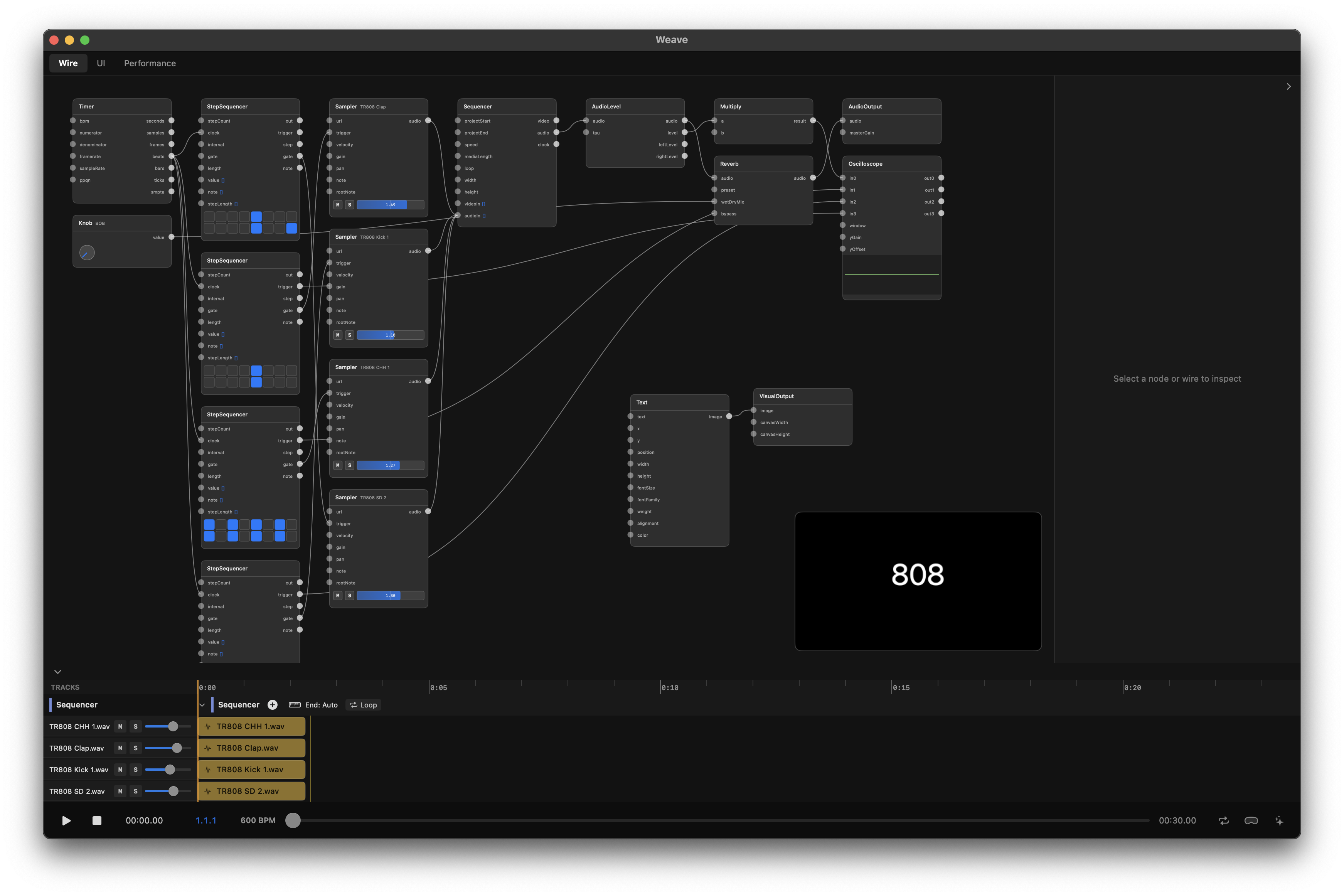
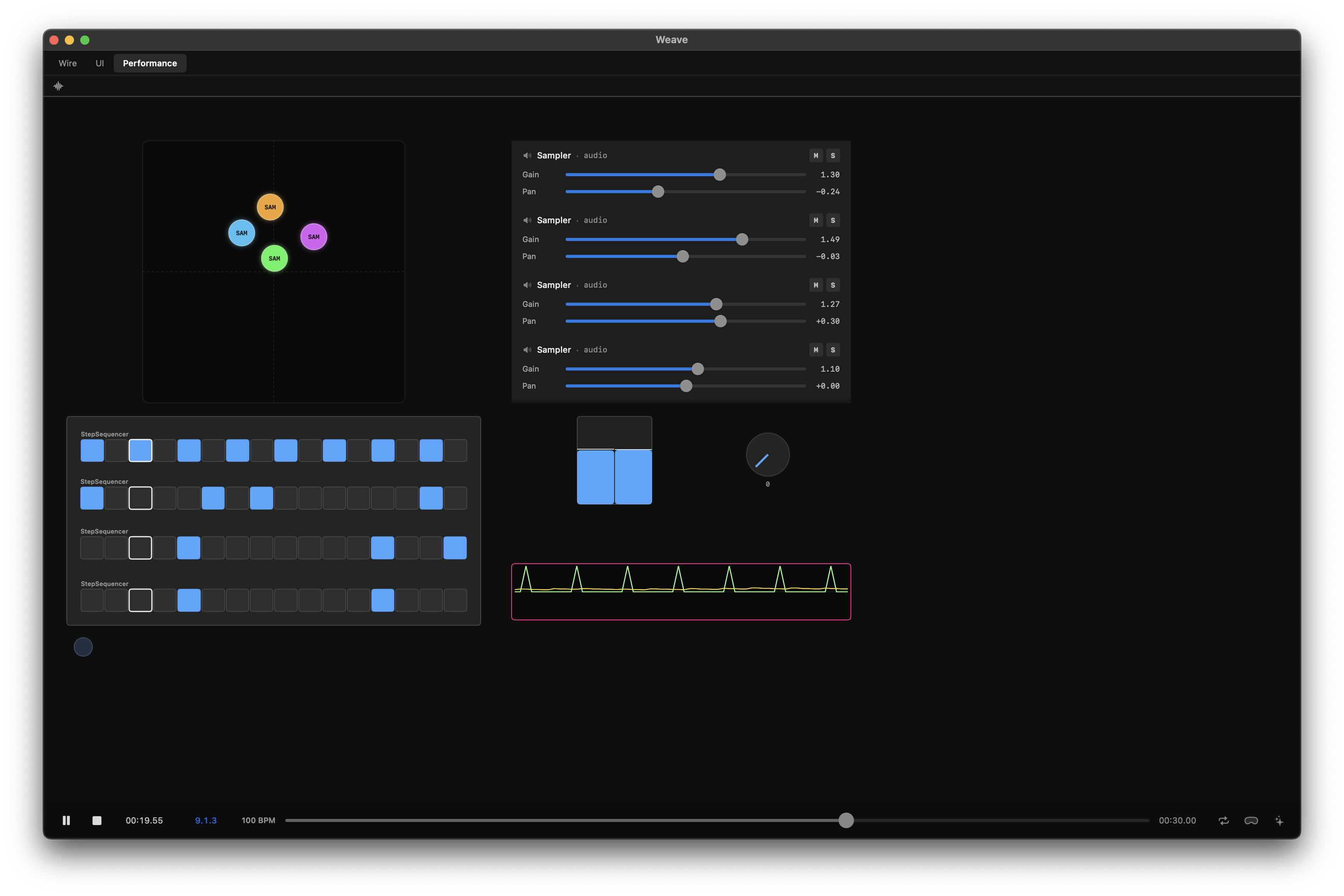
Composable node graphs, modulation on every port, on-device neural generation, live capture, and real-time or offline render — for the Apple stack.
Patch 217 nodes into live signal graphs. ⌘K fuzzy-inserts any node at the viewport center.
Every port is animatable, with LFO, Tween, envelope, and modulation slots. MIDI and (planned) OSC drive any parameter.
SDXL Base/Turbo, SD 1.5, HTDemucs stem separation, and MusicGen — CoreML, no cloud round-trip.
Sources, audio, controllers, math, visual, 3D, vector, analysis, neural, and I/O — patch them freely. Press ⌘K and type to insert any of them.
CoreImage, AVFoundation, Metal, and CoreML underneath — composable graphs, a SwiftUI editor, and live + offline runtimes on top.
Plugin authors depend only on InceptCore. Drop a .js script node in your Plugins folder and ⌘R, or ship a Swift Package.
A daily-driver alpha: editor, live + offline runtimes, on-device neural generation, spectral analysis, 3D/WebXR, granular synthesis, a full logic/control-flow set, and a JS plugin system are in place. Next: convolution reverb, audio and image switching, user Metal shaders — and the first TestFlight builds.
Read the roadmap →Editor, runtime, offline .mov export, on-device diffusion, stem separation, 3D/WebXR, and live capture — already in place. Signups open with the first TestFlight build.
A woodblock print is carried by a few flat colours, each cut on its own block and aligned by registration marks (見当, kentō) so they land in place. This interface is built the same way: three pigments over a warm block ground, each carrying one meaning, never more.
The seal. Reserved for what you can do — the call, the primary button, the bound output. Rare on purpose, so it always means something.
The linework. The everyday voice of the page — labels, node names, the wires and steps of a running patch. Prussian blue, the pigment that changed ukiyo-e.
The lit state. Only what is happening right now — the live dot, a sampler firing, the playhead crossing a step. Ochre drawn from Amur cork bark.